
Baekriseomseom-gil Road
Baekriseomseom-gil Road connects Yeosu and Goheung.
Baekriseomseom-gil Road comprises 11 sea-crossing bridges, collectively known as the Eleven Bridges, connecting Dolsan in Yeosu to Yeongnam in Goheung.
Of the 11 bridges planned to connect the islands around Yeosu, a major tourist destination in southern Korea, five bridges linking Hwayang-myeon in Yeosu and Yeongnam-myeon in Goheung have been completed. Of the six bridges planned between Dolsan and Baegya, two—Baegyadaegyo Bridge and Hwataedaegyo Bridge—have also been completed. The bridges connect Yeosu’s beautiful islands and major tourist attractions.
Once the Hwatae–Baegya section, scheduled for completion in 2028, is finished, all 11 bridges will form a continuous route from Dolsan-eup in Yeosu to Yeongnam-myeon in Goheung. Together, the diverse bridges, reminiscent of an open-air bridge museum, and the jewel-like islands will create a world-class coastal tourism corridor.
The five bridges between Yeosu and Goheung are illuminated at night, allowing visitors to enjoy Yeosu’s romantic night seascape.
Hwayang–Jobaldaegyo Bridge
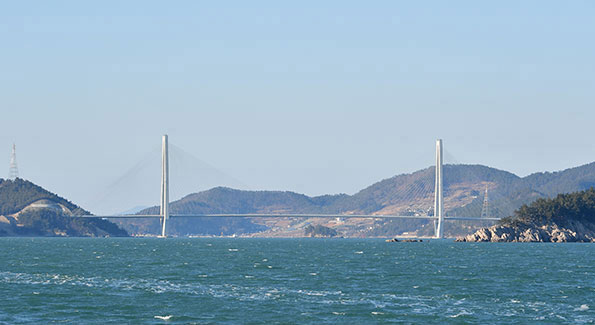
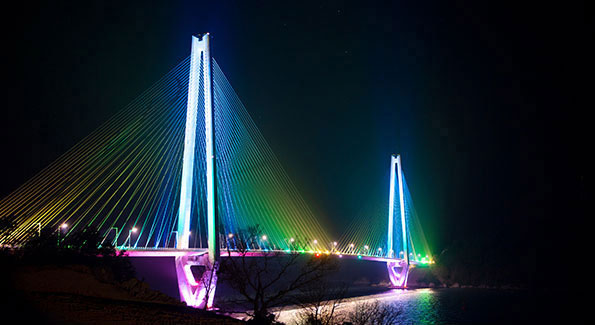
Connecting Jangsu-ri in Hwayang-myeon to Jobaldo Island in Hwajeong-myeon, this is the first bridge on the route to Goheung. Featuring two diamond-shaped pylons, it is a three-span continuous concrete cable-stayed bridge, built entirely with Korean technology to world-class standards. The pylons stand 170 m tall, and the bridge stretches 854 m in length. The bridge’s design concept, Gayeonjigyo (bridge of beautiful connections), symbolizes a gateway to the islands and a path toward the future, bringing people and places together through meaningful connections.
Dunbyeongdaegyo Bridge
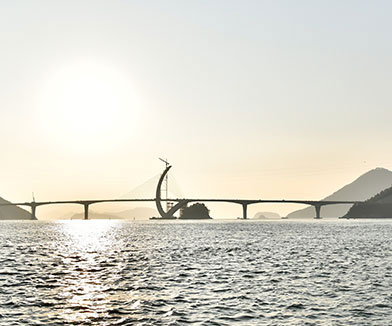
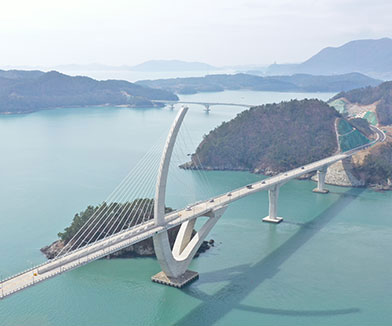
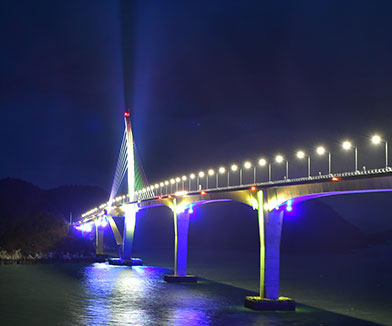
This bridge connects Jobaldo Island and Dunbyeongdo Island in Hwajeong-myeon. Symbolizing the islands of Yeoja Bay and the rising sun over Jobaldo Island, this distinctive bridge features an innovative and harmonious asymmetric cable-stayed design with a single circular pylon supported by V-shaped legs. With its graceful curves, elegant appearance, and exceptional architectural beauty, it stands out as a one-of-a-kind structure among the bridges in the region. The bridge measures 990 m in length and 12.05 m in width. Its design concept, “GATE of One,” highlights the unprecedented three-dimensional silhouette of its circular pylon.
Nangdodaegyo Bridge
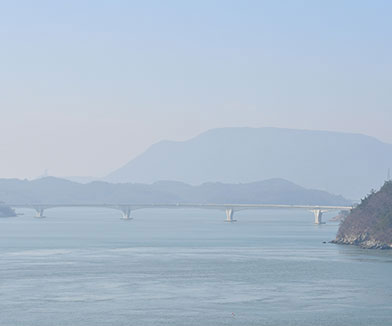
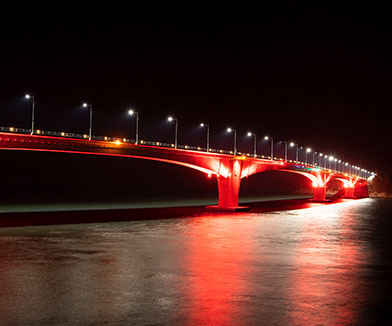
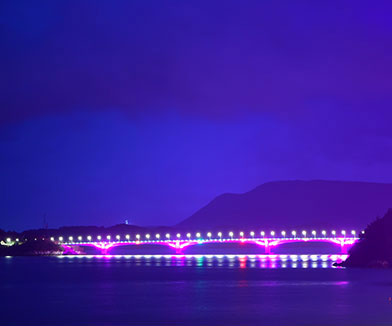
This bridge connects Dunbyeongdo Island and Nangdo Island. It is a prestressed concrete (PSC) box girder bridge featuring a 170 m main span, the longest of its kind in Korea. The bridge measures 640 m in length and 12.5 m in width, with two lanes accommodating traffic in both directions. Its span arrangement (150 m + 170 m + 150 m) enhances visibility along the main navigation channel and creates a rhythmic visual effect. The open design also allows drivers to enjoy sweeping views of the beautiful islands scattered across the sea.
Jeokgeumdaegyo Bridge
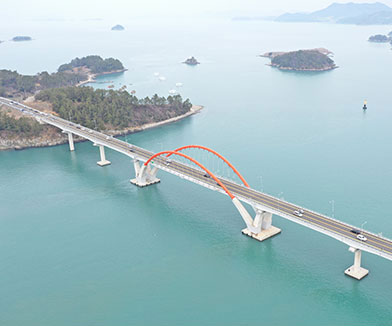

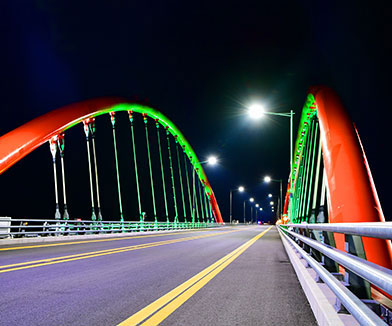
This arch bridge connects Nangdo Island and Jeokgeumdo Island in Hwajeong-myeon. The bridge measures 470 m in length and 12.5 m in width, with a maximum span of 120 m and two lanes accommodating traffic in both directions. Designed to blend harmoniously with the surrounding landscape and islands, it features an elegant arch structure with the deck positioned midway through the arch. An arch bridge uses an arch-shaped structure to support the bridge deck. Arch bridges are classified as deck arch, through arch, or half-through arch bridges according to the position of the deck. In a half-through arch bridge, the deck is positioned between the upper and lower portions of the arch. Known for their graceful appearance, arch bridges have long been admired for their beauty. This type of bridge dates back to ancient Roman times, when stone arches were used in bridge construction.

Palyeongdaegyo Bridge
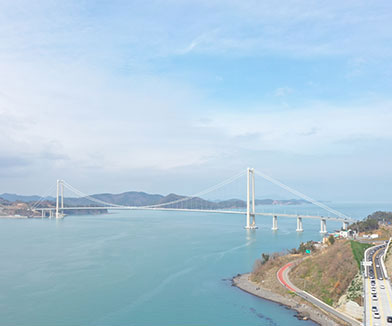
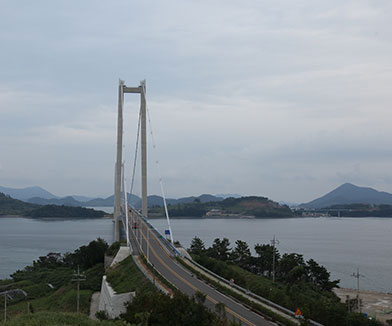

The 11th and final bridge in the Yeosu–Goheung Bridge Connection Project, Palyeongdaegyo Bridge is the first bridge encountered when approaching from Goheung. Taking into account its role as a gateway and its symbolic significance, the bridge was designed as an elegant single-span suspension bridge with its main cables anchored to the ground at both ends. The two-lane bridge took 12 years to complete. The bridge measures 1,340 m in length and 13.0 m in width, with a main span of 850 m between its supporting towers. At the time of its design, it was Korea’s longest single-span suspension bridge.

Hwataedaegyo Bridge
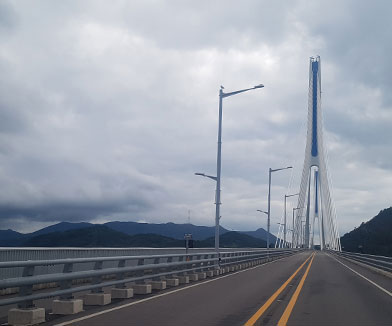

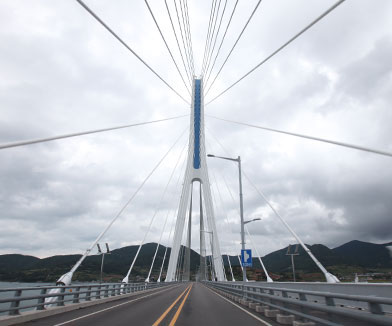
Hwataedaegyo Bridge is the last of the 11 bridges connecting Yeosu and Goheung and is a cable-stayed bridge linked to Dolsan. The bridge has a total length of 1,345 m and opened on December 22, 2015. Its main towers stand 130 m tall, making them the tallest in Korea among towers built using special steel. The main span between the two towers measures 500 m, making it the third-longest among Korea’s cable-stayed bridges, following Incheondaegyo Bridge (800 m) and Busanhangdaegyo Bridge (540 m). Once the Baegya–Hwatae section is completed in 2028, visitors will be able to enjoy a scenic coastal drive connecting Yeosu’s islands from east to west.
Baegyadaegyo Bridge

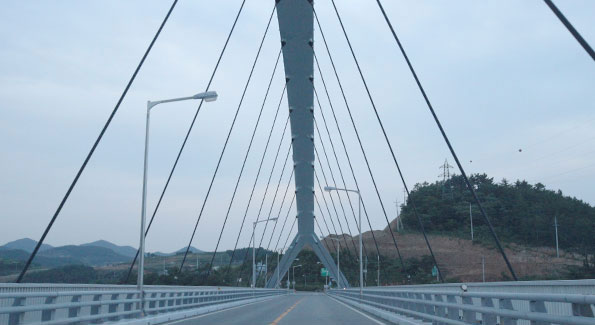
Baegyadaegyo Bridge was the first of the 11 bridges connecting Yeosu and Goheung to be constructed. Its white steel framework resembles the ribs of a giant dinosaur, making it an eye-catching landmark for passing visitors. The bridge measures 325 m in length and 12 m in width. Featuring a sleek arch design resembling a teapot handle, the bridge supports its deck with an arch rather than main towers, incorporating advanced construction methods and cutting-edge technology. From the Baegya Ecological Trail, visitors can enjoy close-up views of the bridges connecting Yeosu and Goheung. The scenic and pleasant drive to Baegyadaegyo Bridge is an attraction in itself, making it a popular driving route. Various sculptures beneath the bridge also offer additional points of interest for passersby. Baegyado Island, connected to the mainland by the bridge, serves as a hub for island tourism, with passenger ferries departing for Sanghwado, Hahwado, and Sado islands, which are not connected by bridges.
